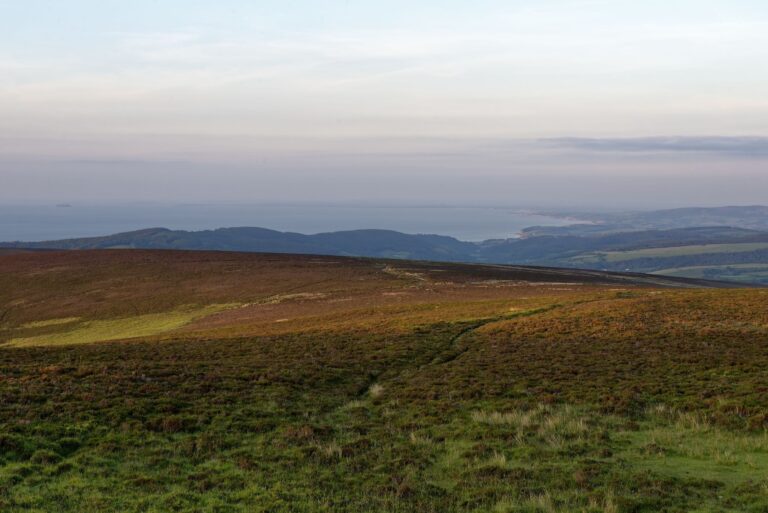

Exmoor is home to some of the most beautiful storybook villages and historic sites. There are old bridges, ancient castles, and villages that hold so much history it feels like stepping back in time. If you’re interested in the history of Exmoor and why you should visit these storybook villages, keep on reading — we’ve covered Dunster, Allerford and Porlock below.
Want the short version?Grab our free printable bucket list of every spot in this guide, ready to take with you.
Download the GuideOriginally, Dunster was a busy trading port, situated by the channel. Over time, as the land shifted, the channel became blocked, and Dunster could no longer thrive as a trading port, turning to the wool trade instead. This medieval village was mentioned in the Domesday Book, showing just how old this village really is. With around 200 listed buildings, the village’s architecture is highly preserved and protected, keeping Dunster’s charm intact.
The village has a still-running watermill that you can go and visit; this mill has a long history dating back to 1086. The building you can see now is over 240 years old, as the original mill fell into a state of disrepair and was rejuvenated into the watermill of today.
It wouldn’t be a complete history lesson without mentioning the famous Dunster Castle. The original castle was built around 1066 during the time of William the Conqueror, when it was built by the de Mohun family. What remains now is the stunning gateway. Then, in 1376, the Luttrell family bought the castle and restored it to its former glory. The final chapter in the castle’s history came when Anthony Salvin remodelled it into a Victorian country house.

There are plenty of things to do in Dunster, whether you’re taking the family for a day trip or your partner for a romantic adventure.

Given all that history, Dunster Castle simply had to make this list. Explore the stunning building and grounds, and take in the architecture of this historic castle — it’s a great spot for a picnic (which the castle allows). The castle is only open spring to autumn, so plan your visit accordingly.

Dunster offers many independent shops, art galleries and gift shops. Browse the range of shops along the main street — you won’t find any big chains here, just local, independent stores.

This small, picturesque village offers a variety of places to eat. Head to a cosy pub for a hearty meal or a cute little café for some light lunch. Options include Cobblestone’s and Tessa’s Tea Shop, or classic pubs such as The Luttrell Arms Hotel.

If you are visiting with your partner, you cannot miss Lover’s Bridge. This idyllic spot is perfect for those who seek a bit of peace and love the countryside — have a picnic and watch the sunset, or simply stroll over this historical bridge.
Dunster does see some visitors during the summer months, but it isn’t a well-known tourist hotspot generally. This means that any time of year could be a great escape. Summer brings flowers, sunshine and the chance to explore the castle grounds, while winter offers cosy charm, a light festival and a peaceful atmosphere.
Dunster is known for its medieval castle, working watermill and cobbled high street lined with historic buildings. It’s one of the best preserved villages in Exmoor.
Yes. The castle sits above the village and offers views across Exmoor and the Bristol Channel. It’s managed by the National Trust and includes gardens and parkland to explore.
Most visitors spend half a day in the village itself, or a full day if combining it with the castle and surrounding walks.
Yes. The village is compact and easy to walk around, and the castle grounds give children space to run around.

Similarly to Dunster, this picturesque village was first recorded in the Domesday Book in 1086. Allerford grew up around a crossing point on the River Aller, which is where its name comes from.
Packhorse Bridge is another Grade II listed building, along with many others spanning across Exmoor. Little is known about its history beyond the fact it was built in the 15th century — but think about how many people have crossed it since. So many stories.
The bridge was built to let packhorses cross the River Aller, with the narrow design and low walls typical of packhorse bridges, making it easier for horses to pass — an incredible piece of history in itself.

As mentioned above, there is less to do in Allerford than some of the other villages, but it is 100% worth visiting for the beauty of it — one of the most fairytale-looking villages you’ll visit. There are still a few things you can do while taking in the scenery.

Perfect for those who love history. The unique aspect of this museum is that the building used to be a functioning school before it became the museum. It holds artefacts found in and around Exmoor, plus ‘The School Room’, with old desks, textbooks and displays of former students’ work.

Maybe nature is more your thing, and a woodland walk sounds right up your street. Selworthy Woods is a beautiful woodland near Allerford where you can go for a peaceful stroll and listen to the birds — lovely for the family or with a partner, surrounded by trees and greenery.

If you’re looking for the most movie-like café and gardens, this is the place to go. It’s the only café situated directly in Allerford and is often praised for its beauty and quality — grab a cream tea in the gorgeous gardens, or a full lunch of jacket potatoes, scones and more.

Bring a friend, a partner, or just yourself and take some movie-inspired photos. Allerford is perfect for photographers and lovers of fairytales. This village is generally very quiet, as it is a true hidden gem in Exmoor — there’s no better spot for photos.
As there is less to do in this small village, you’ll be spending more time wandering and walking, which means the weather matters. We’d recommend going in spring or autumn to avoid both the extreme heat and the bitter cold.
Allerford is best known for its picturesque packhorse bridge, thatched cottages and its setting within the Holnicote Estate. It’s one of the most photographed spots on Exmoor.
Visitors can see the old bridge, walk nearby countryside trails and visit the West Somerset Rural Life Museum, which is housed in a Victorian schoolroom.
Yes. Allerford sits close to several Exmoor walking routes, including paths towards Selworthy Beacon and the coast.
The village itself is small, so most visitors base themselves in nearby Porlock or Minehead and visit Allerford as part of a day out.

Porlock is an incredibly historical storybook village, with over a thousand years of history behind it. The village dates back to the Viking and Saxon eras, and was subject to a Viking invasion in 914 AD. Interestingly, in Old English, Porlock means ‘The Locked Port’, a nod to how the sea once receded here.
There are a lot of literary ties to Porlock, from poets to novelists who have drawn inspiration from this beautiful coastal village. The book Lorna Doone was based on the area around Porlock.
Another great piece of history linked to Porlock is Culbone Church, the smallest parish church in England. Its architecture and surroundings are beautiful, and it seats only around 33 people — it’s also only accessible on foot, which really adds to the magical charm of this hidden secret.
Porlock’s most famous literary moment, though, involves Samuel Taylor Coleridge. In 1797, while writing his poem Kubla Khan after an opium-induced dream, Coleridge was interrupted by an unnamed visitor who arrived “on business from Porlock” and kept him talking for around an hour. By the time Coleridge got back to his desk, the vision that had inspired the poem had faded, leaving Kubla Khan as an unfinished, 54-line fragment. The mystery visitor lives on in literary history as “the person from Porlock”, a phrase still used today for anyone who interrupts a flash of inspiration.

Porlock is the best option if you’re looking for plenty to do — it’s a much livelier village than it’s given credit for.

There are so many beautiful spots for a walk in Porlock. Try a circular walk around Porlock and Porlock Weir, starting from whichever end you prefer, for the coastal views — or just stroll so far and head back. Hawcombe, near Porlock, is a lovely little walk for those who seek peace.

If you’re after a proper meal with your family in one of Exmoor’s prettiest locations, you won’t be short on options. A few popular choices include The Ship Inn, The Royal Oak and The Castle — often praised for their delicious food and friendly atmosphere.

This one is for the sporty travellers, the adventurous, and the adrenaline junkies. Exmoor Adventures is located near Porlock Weir and offers a range of outdoor activities including kayaking, mountain biking, archery and rock climbing. Bring your friends and family and get that heart rate going.
Porlock doesn’t tend to get overrun with tourists like many of the beautiful villages. The best time to visit would be during spring and summer when everything is fully open, the days are longer for exploring, and you can spend time doing the activities that Exmoor Adventures has to offer.
Porlock is a historic village at the edge of Exmoor National Park, known for its thatched buildings, coastal setting and access to Porlock Weir.
Porlock is the main village with shops and services, while Porlock Weir is a small harbour about two miles away with a pebble beach and coastal walks.
Yes. Its location makes it a popular starting point for walks up Porlock Hill, along the coast, and into the wider national park.
Porlock Hill is one of the steepest A-roads in England, with a gradient of up to 25%. It offers dramatic views but requires careful driving.
As well as these storybook villages, there’s so much to explore in Exmoor. From quiet woodland walks and dramatic coastal views to ancient landmarks and cosy places to eat, there’s always another corner waiting to be discovered.
Check out our other Exmoor guides →